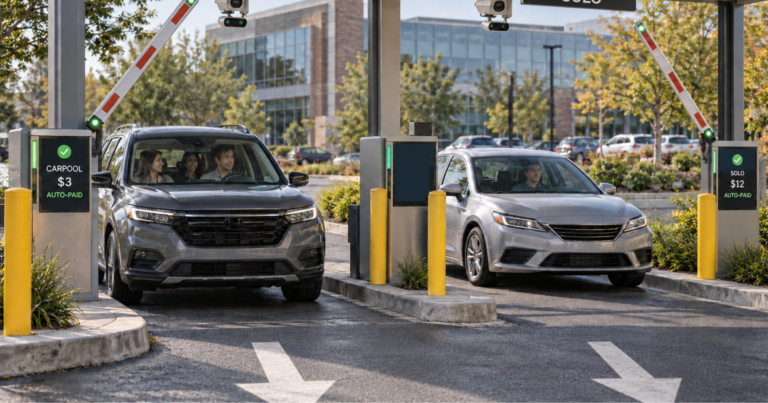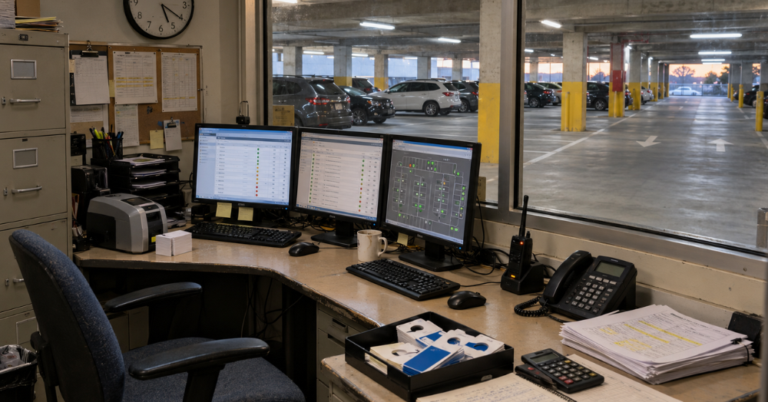

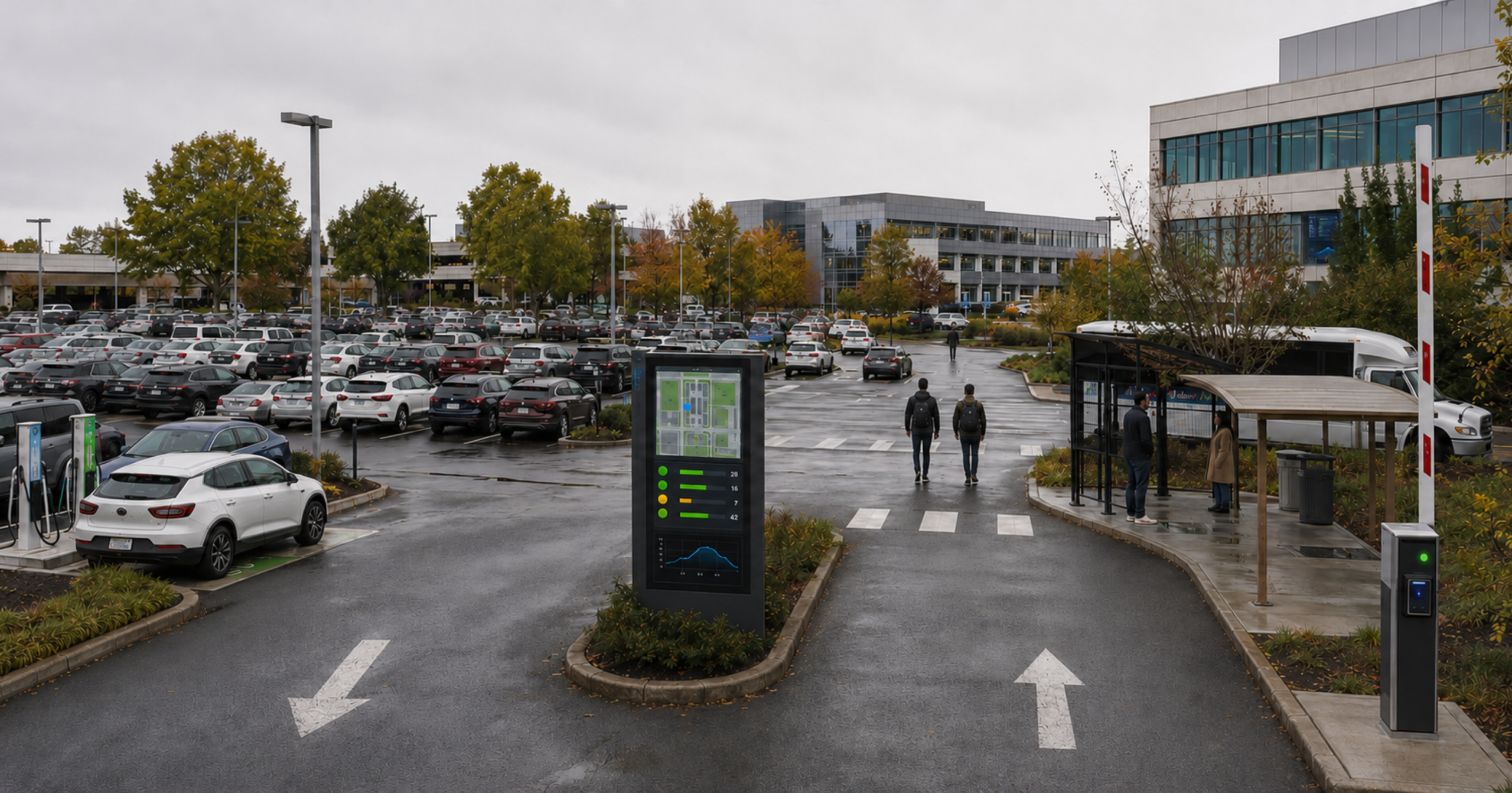
Parking access control systems are much more than gates that open and close. With each transaction, these systems generate data. That data creates opportunities to extract strategic insights and advance programs with real operational value.
By capturing that data and putting it to work, you can build the foundations for three valuable outcomes:
- Optimize your parking utilization
- Maximize revenue from available spaces
- Reduce your administrative burdens
A common thread connects all three of these concepts: Better visibility into how your parking facilities are used creates opportunities to achieve desirable outcomes with less effort. Let’s explore how these benefits organically arise from real-world use cases.
Optimize your parking utilization
Post-pandemic utilization patterns — especially hybrid work schedules — have made parking demand genuinely hard to predict. Researchers from the Texas A&M Transportation Institute documented this in their 2025 Urban Mobility Report: Occupancy patterns that used to be stable and predictable now change from day to day, lot to lot, and season to season.
This leaves transportation managers in a tough spot. Without the right insights, uneven occupancy patterns force them to make important strategic decisions based on anecdotes and gut feelings rather than hard data.
Parking access control systems offer a solution. They generate a continuous and perfectly reliable facility-wide record of who is parking, where they’re parking, and when they park. Over time, all that data reveals patterns that wouldn’t otherwise be visible.
Some hypothetical examples of these patterns include:
- You find that you have a surface lot averaging 40% capacity on Tuesdays while a covered parking structure nearby is so full that it has to turn people away.
- Electric vehicles (EVs) sit for hours beyond their charging windows at designated spaces as a demand backlog piles up.
- You have readily available overflow lots that your commuters never use because they don’t know about them.
Every one of these theoretical problems would be fixable — if you were aware of it. Data from parking access control systems facilitates that accurate visibility and creates natural opportunities to act on it.
Following the same theoretical utilization patterns, you could:
- Redistribute permit allocations between the surface lot and the covered parking structure to balance occupancy rates across both facilities
- Set tighter EV reservations and add automated swap notifications and enforcement actions to ensure the smoother charging spot turnover
- Guide commuters to available overflow capacity in real time to make better use of spaces that would otherwise sit empty
In essence, you can replace intuition, anecdote, and guesswork with an evidence-based approach to management that replaces costly assumptions with hard facts.
Maximize revenue from available spaces
When your parking operations are leaking revenue, you may not even notice. That unrealized revenue doesn’t announce itself: Instead, it quietly builds up in the gap between what your facilities could generate and what they actually are generating. Without utilization data, that gap is virtually impossible to measure, let alone close.
By telling you what’s actually available at any given moment, parking access control systems can change your revenue outlook in a very specific and practical way. It’s a simple but profound concept with real, immediate pathways to generating financial returns.
When you have deep, data-backed insights into both real-time and historical occupancy patterns, you can inform decisions like:
- Releasing unoccupied permitted spaces into a flexible pool of parking inventory for on-demand purchase during peak demand windows
- Identifying chronically underutilized parking zones and repricing them to stimulate demand instead of letting them go unoccupied
- Predicting high-occupancy periods and demand surges, and adjusting availability or pricing before demand peaks instead of waiting until it’s too late
The critical element here is timing. Static pricing and manual inventory management are always behind, and playing catch-up inevitably leads to missed opportunities. Parking access control systems anticipate these scenarios and position you to act on them before valuable revenue opportunities dry up.
For additional insights, check out our article on paths to ROI on your parking reservation software investment.
Reduce your administrative burdens
As any transportation administrator knows, managing commuter and parking programs can get very complicated, very quickly. The more facilities, permit types, and employee classifications you have to manage, the greater this administrative burden becomes. Exceptions, disputes, and manual interventions can pile up, leaving small teams overwhelmed and with little support.
These problems often have a common root cause: Rules that were outlined in policy documents aren’t actually enforced in the parking system. This can happen for a variety of reasons:
- Outdated rules remain in place because they system itself was never updated
- Eligibility criteria are too complicated to embed in the system, forcing staff to handle exceptions on a case-by-case basis
- Access control, permitting, incentive tracking, and enforcement are siloed, and the people handling each of these tasks has little visibility into adjacent operations
No matter the reason, the outcome is the same: When the system itself doesn’t know who is eligible for what, a human administrator has to make the decision. That opens the door to problematic inconsistencies, especially for programs that run at scale.
Real-time and historical data generated by parking access control systems help solve these issues — at scale. When your parking system is backed by authentic, verified visibility into who is using which spaces and when, it can automatically handle everything from permit management to policy enforcement without the need for any further manual input.
From there, administrative burdens disappear as relief cascades:
- Waitlist management resolves itself as spaces open up, and your administration team doesn’t have to issue notifications or track anything manually.
- Permit renewals automatically trigger within your system. You can also base renewals on actual usage patterns rather than arbitrary calendar dates.
- Violations surface through the data rather than through complaints, making enforcement defensible, consistent, and transparent.
There’s also an important element of fairness at work here, too. When rules are enforced by an automated system rather than human administrator, the process feels more objective. This sets the table for fewer disputes and faster resolution to the issues that may occur.
Less friction for commuters means fewer support requests. Fewer support requests, in turn, lead to a more efficient administrative operation with a lower stress burden.
CommuteHub puts your parking access control data to work for the benefit of your organization
At the end of the day, the insights your parking access control systems generate are only as valuable as the platform interpreting them. This is where CommuteHub shines as an organizational tech tool: It actively connects your access control data to the systems and programs capable of harnessing its operational value.
Turn your parking data into a strategic gold mine with:
- Real-time occupancy tracking and utilization dashboards
- Dynamic pricing and flexible permit management
- Automated eligibility, waitlist, and renewal processing
- Self-service parking reservations and payment tools for commuters
- Compliance and ESG reporting powered by verified data
CommuteHub delivers these and many other powerful capabilities, all while providing complete support for your transportation demand management programs. It’s ideal for organizations that want to maximize revenues, minimize administration, and reduce commute-related friction while making a real and measurable sustainability difference.