

Employers have a very powerful transportation demand management program tool: parking policy. It’s often the single most influential lever organizations have for influencing commuter behavior, yet it’s consistently underused.
Pricing, capacity controls, cash-out programs, and reservation systems all shape the commute decisions employees make. When used strategically, these levers can do more to move the needle on mode shift than just about any other measure.
The connection between parking policy and TDM outcomes is direct, measurable, and actionable. Experienced administrators use four specific policy strategies to guide organic behavior change without heavy-handed interventions:
- Pricing as an instrument for guiding demand
- Capacity caps and their ability to prompt mode shift
- Parking cash-out programs that pay for themselves
- Reservations as a behavioral nudge
Let’s explore each of these strategies and look at how they work in practice:
Pricing is your most powerful demand management tool
If you’re trying to reduce employee reliance on solo driving, free parking is your TDM program’s greatest enemy. When driving alone carries no additional costs, every alternative you’d like to promote starts at an inherent disadvantage. Worse, this disadvantage will persist regardless of how good your commuter incentives or transit subsidies may be.
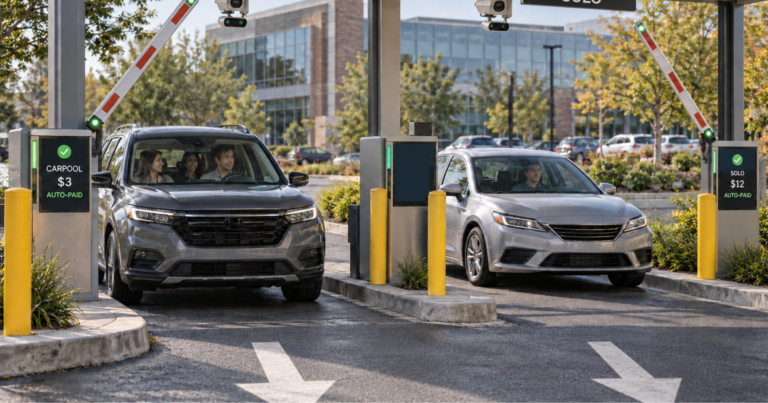
Pricing doesn’t have to be punitive for this strategy to be effective. Even modest daily rates can meaningfully shift the decisions of employees who are on the fence about driving. The key is to right-size your pricing structure:
Tiered pricing distributes demand across your facilities while nudging cost-conscious commuters toward alternatives. It works best in facilities where preferred spots command a premium because they’re more convenient, covered, or adjacent to EV charging infrastructure.
Pairing tiered pricing with equity considerations signals that you’re conscious about fairness, and that can win you a lot of goodwill. Wage-adjusted and location-based pricing models ensure that lower earners aren’t disproportionately burdened by policy changes conceived by high-earning managers and executives.
Dynamic pricing takes the concept further. When rates automatically respond to real-time occupancy signals, demand regulates itself. Price-sensitive commuters self-select alternative modes or less congested facilities, which generates a valuable transportation demand management program outcome without any additional administrative effort.
However, there’s one critical TDM program design principle to keep in mind: Pricing works best when paired with strong organizational support for practical alternatives. Transit subsidies, vanpool programs, and guaranteed ride home coverage give employees accessible options when pricing makes parking less attractive.
The takeaway: Pricing without alternatives generates resentment, but pricing with alternatives leads to behavior change.
Capacity caps create scarcity, and scarcity forces behavior change
Just as pricing uses cost to influence behavior, capacity uses availability. Both are legit TDM instruments, but they work differently enough to warrant separate consideration.
A parking cap places a ceiling on the number of permits or daily reservations available at a given facility. When parking supply is visibly constrained, employees who might otherwise default to driving become more likely to consider alternatives — not because parking got more expensive, but because it got less reliable.
Caps are especially effective for managing high or variable demand, which have become common in the age of hybrid work. For example, consider a campus that caps daily reservations at 80% of total capacity and holds the remainder of its spots in reserve. This setup forces employees without a guaranteed spot to seriously consider their modal decision with every commute.
Event-based caps can be just as effective. This strategy works by temporarily reducing inventory during all-hands days, major campus events, or end-of-quarter surges while actively promoting alternatives like public transit or carpooling. It essentially converts predictable spikes in parking demand into wins for your transportation demand management program.
Capacity-based strategies also generate a data advantage. Organizations that run cap-based systems generate rich utilization data that reveals exactly which days, zones, and employee populations log the most drive-alone trips. That level of granularity makes it far easier to target specific segments of your commuter population.
Parking cash-out programs: A powerful but underused TDM tool
Parking cash-out programs are simply. They allow employees who voluntarily give up a parking benefit to receive cash payments or other financial incentives. In practice, they’re among the highest-ROI strategies a transportation demand management program can use. They’re also surprisingly underutilized.
This strategy works because it’s based on behavior. Monthly permits create a sunken-cost psychology: Employees feel locked into driving because they already paid for a permit. Cash-out dissolves that obstacle by attaching a financial incentive to modal alternatives. Suddenly, not driving to work has a powerful and readily visible upside.
Well-designed cash-out programs include a few key elements. These include:
- A daily or monthly opt-in mechanism that adds flexibility and removes friction
- Payout rates that make participating in the program genuinely appealing
- Trip logging processes that verify alternative commutes and help build reliable TDM program data
- Integration with additional commuter benefits to make the financial mechanics of the program easy and seamless
Organizations that have implemented cash-out programs consistently report meaningful reductions in drive-alone rates. Best of all, cash-out programs often end up paying for themselves through infrastructure cost reductions and softened parking demand.
Use parking reservations as a behavioral nudge
Traditional monthly permit systems are, at best, a passive and only partially effective element of a functional transportation demand management program. When a commuter has a static monthly pass in hand, modal decisions disappear from their daily thought process. By requiring daily parking reservations, you prompt your people to reconsider driving as a default behavior.
That can lead to desirable outcomes: Employees who don’t really need to drive that day will increasingly choose not to reserve a spot. Meanwhile, more capacity will be available to commuters who really do need to drive.
This usually results in a meaningful reduction in unnecessary drive-alone trips. Even better, you’ll achieve that reduction without any negative impacts on employees who don’t have a practical alternative to driving available that day.
Reservation systems also give administrators precise control over inventory allocation:
- You can prioritize HOV and carpool reservations within your daily capacity pool.
- On high-demand days, you can send automated alternative mode communications out early to give employees time to consider their commute decision.
- The utilization data you generate from your parking reservations can feed directly into your Scope 3 emissions reporting and TDM compliance documentation
The shift from monthly permits to daily reservations is one of the most powerful transportation demand management program changes you can make. Even better, it requires absolutely no additional infrastructure. All you need is the right TDM management tools.
CommuteHub connects parking policy to TDM outcomes
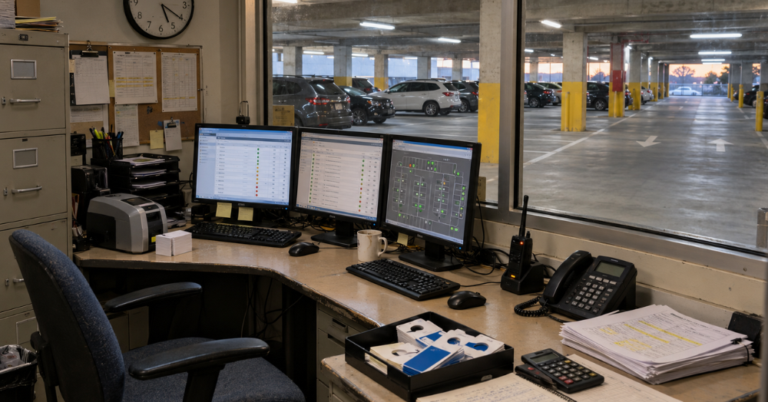
With parking, levers like pricing, capacity caps, cash-outs, and reservation systems all deliver better results when they’re connected. When policy changes automatically flow through permitting rules and utilization data, you get a transportation demand management program with less administrative overhead and a better end experience for your commuter base.
CommuteHub was purpose-built to make this possible. With CommuteHub’s comprehensive suite of TDM tools, you can easily manage and automate:
- Tiered and dynamic pricing policies
- Flexible daily choice permitting
- Parking cash-out enrollments and financial distributions
- HOV prioritization
- Scope 3 compliance reporting
All these features — and many others — are accessible through a single, user-friendly centralized dashboard. CommuteHub makes it easy for organizations that use parking policy to prompt better, more sustainable TDM program outcomes.
See how CommuteHub can be a TDM game-changer for your organization. Get in touch to arrange a personalized demo of the CommuteHub platform.