
Generic sustainability messaging raises awareness, but it rarely changes behavior. That’s a big reason why drive-alone rates have remained stubbornly high in many workplaces despite years of green campaigning.
Effective sustainable commuting solutions take a totally different approach. They replace slogans and tokenism with specific strategies that carefully target the actual decision points that guide commuters’ transportation choices. Broadly, this means making driving less of an automatic choice.
Here’s how it all works, from the root issue to the automated solution.
Why generic sustainability messaging fails
Most sustainable commuting campaigns share a common flaw: They ask commuters to change their behavior for abstract reasons while leaving established structural supports for solo driving totally untouched.
Those support structures often include:
- Static monthly or annual parking permits that lock in driving
- Free, unlimited employee parking
- Guaranteed parking availability that removes daily decision-making from the commuting equation
Under these conditions, the path of least resistance still leads to the car. To change that outcome, you’ve got to change the systems that support it.
How pricing changes commuter behavior for the better
Parking pricing may well be the strongest evidence-backed lever transportation administrators can use. It’s also one of the most underutilized.
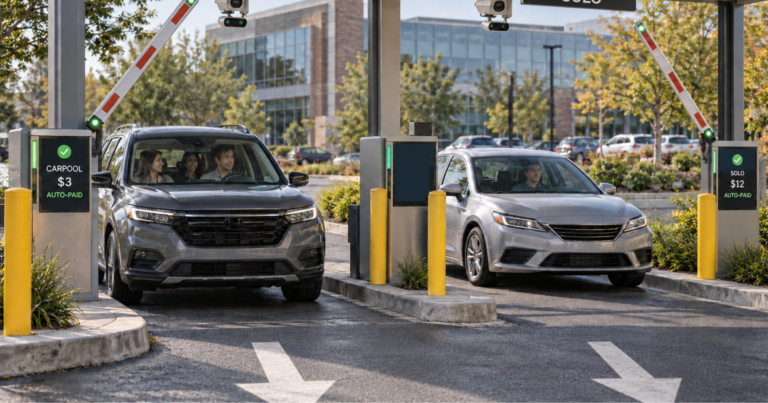
The underlying mechanism of parking pricing is deceptively simple: When driving carries a visible, daily cost, commuters reconsider their transportation options every morning. Without that cost, the decision dialogue never happens.
Daily is the key word. When you issue monthly or annual permits, the daily cost effectively falls to zero in the commuter’s mind. Driving becomes automatic because parking is already paid for.
A substantial body of research shows that even modest daily rates produce measurable reductions in drive-alone trips. For example, a Cosmis Corporation study published by the Victoria Transport Policy Institute found that even very modest parking fees reduced vehicle trips by up to 17.5%. The same study also found that vehicle trips continued to drop as fees rose.
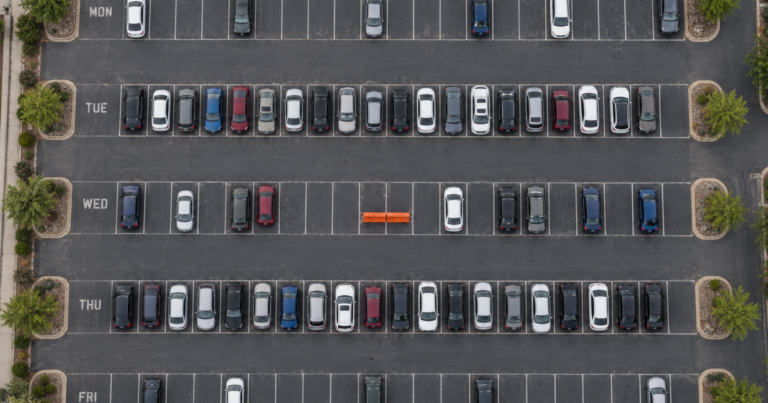
With dynamically priced daily choice parking, every day offers a new opportunity to advance your sustainable commuting solutions. Pricing doesn’t have to be hostile — it only needs to be present. It also works better when it’s tiered:
- Attach premium rates to the most convenient or desirable spots
- Apply standard rates to general inventory
- Use discounted rates for peripheral supply
This strategy distributes demand while giving cost-conscious commuters a natural off-ramp toward alternatives.
Parking cash-out programs extend the logic even further. Instead of charging for parking, they pay commuters to give it up. Studies have documented demand reductions of up to 45% in well-designed cash-out programs — far beyond what any generic awareness campaign could ever hope to generate.
Use incentive structures to build lasting habits
By pricing parking, you create financial disincentives for driving. This approach is far more effective when paired with positive incentives for using alternatives. By doing this, you make choosing a sustainable mode feel better than driving, both financially and experientially.
Points-based rewards programs are a popular example of positive incentives in action. Every verified public transit, cycling, or walking trip generates a tangible reward for the commuter while logging an authenticated data point in your tracking system. That data is especially valuable if you’re subject to compliance or reporting requirements.
If you want to add another layer to the strategy, consider a tiered status program. Under this model, commuters who consistently choose sustainable commuting solutions earn a special status that can unlock:
- Preferred parking access on days when they do drive
- Discounted daily parking rates
- Priority parking reservations
Tiered status incentives also preemptively answer one of the most common objections commuters have about giving up the solo drive: “What happens on days when I actually need my car?” You build the answer right into your program — all while attaching meaningful benefits to it.
Introduce behavioral nudges at key decision points
Commuters who rely on their cars rarely continue driving because they’ve considered and rejected alternatives. They drive because alternatives aren’t visible in a way that makes them practical or easily accessible.
For example, consider a default driver who has a direct transit route available two blocks from their home. The transit route compares favorably from a commute time standpoint, and costs less — especially after factoring in parking pricing, cash-outs, and any other incentives you decide to offer.
That commuter would probably change their commuting behavior in a lasting way, if only they knew about the alternative.
When sustainable commuting solutions deliver exactly these types of personalized alternatives, barriers to behavior change are systematically removed. By combining personalized commute planning tools with proactive nudges on high-demand days, when parking is more expensive or less available, the alternative arrives at precisely the right moment.
Guaranteed ride home (GRH) programs offer another way to remove contingency anxiety from the equation. They turn “What if something goes wrong?” into “I’m covered no matter what happens.” That psychological tweak can make a world of difference.
Power your sustainable commuting solutions with CommuteHub
Pricing interventions, incentive programs, and behavioral nudges all work better when managed from a centralized, connected platform. CommuteHub is that platform: It powers sustainable commuting by integrating everything from dynamically priced daily-choice parking and cash-outs to tiered incentives, GRH programs, and verified trip logging.
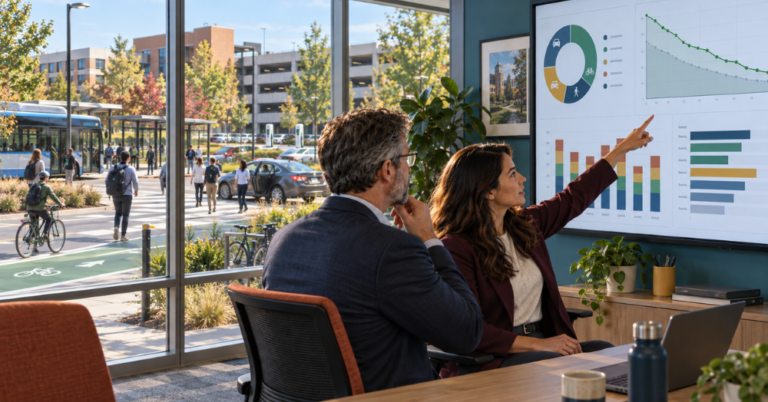
Administrators win by automating what were once complex and laborious trip logging, verification, and program performance tracking processes. Commuters win by connecting instantly with personalized transportation alternatives that cut costs, save time, deliver incentives, and reduce stress.