

When commuters experience friction, organizations often turn to investment as a frontline response. They add parking capacity, launch new shuttle services, and provide bigger transit subsidies. In many cases, these are expensive overreactions to solvable problems.
When the employee commute experience causes addressable issues, it usually indicates systemic shortcomings. Information gaps, fragmented tools, and policies that don’t match the on-the-ground reality your commuters face every day can all contribute to problems that more infrastructure won’t fix.
Instead, you need to address commuting friction at its root cause. To do this, you should understand four key things:
- The hidden source of commuting friction
- Policy-based fixes that cost nothing to implement
- The value of commuting information
- How system integration multiplies positive impacts
Let’s start by looking at a leading but often-overlooked commute-related pain point:
The hidden source of commuting friction
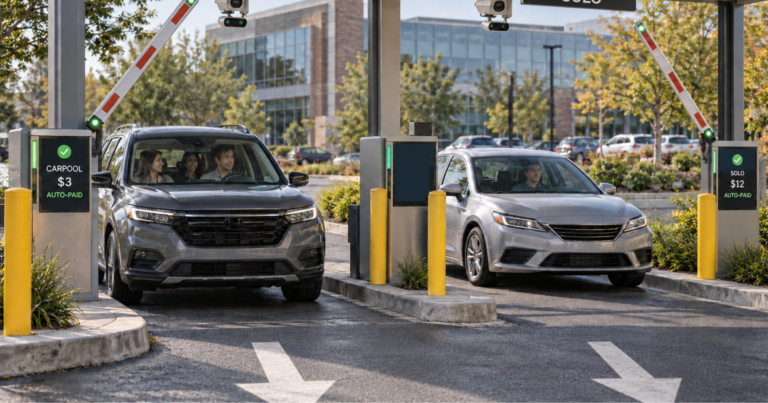
Traffic congestion, transit schedules, and service disruptions are beyond your influence, but there’s one aspect of the commute you can control: parking. It’s also a major source of commute-related pain, especially when it comes to availability.
Common issues include:
- Overcrowding in preferred areas while other lots sit half-empty
- Employees who can’t find available spaces they’re eligible for
- Enforcement gaps that erode trust
These problems arise from resource misallocation, which often manifests in three ways:
Phantom occupancy
Reserved permits hold parking inventory that goes unused on low-attendance days. The lot appears full, but spaces sit idle. Employees circle around, wasting time looking for parking that should be right in front of them.
Zone imbalance
Permit-to-space ratios that make sense when you’re operating at full occupancy become mismatched with demand under hybrid attendance patterns. This leaves some employees overserved while others can’t reliably access parking.
Access ambiguity
Under legacy parking access systems, employees often struggle to verify their permit status, check real-time availability, or understand which zones they’re eligible for. As a result, they default to familiar behavior — and that behavior often guides them to high-demand areas despite inventory being available elsewhere.
You can solve all of these problems without adding more capacity. All you need is better information and a strategic approach to parking allocation.
Policy-based fixes that cost nothing to implement
Parking policy is a powerful lever for shaping commuter behaviors and commuting outcomes. It’s also a tool that carries little to nothing in the way of implementation costs. All it requires is the administrative will to implement strategic changes.
Here are four examples of effective policy changes that can dramatically relieve parking-related commuter friction:
- Replace fixed permits with daily choice access. Phantom occupancy vanishes when you replace your annual or monthly permits with a daily choice system. Inventory that was theoretically consumed but physically idle becomes available to commuters who actually need it. The result: You extend capacity without physically adding a single space.
- Build equity into your pricing structure. Wage-adjusted pricing scales parking costs alongside employee compensation. This makes parking more equitable for lower-earning employees while addressing the financial frustration that can make paid parking seem unfair. It also provides room to create discounted peripheral parking zones so you can efficiently redistribute demand across facilities.
- Prioritize sustainability in a visible way. Give preferential and prominent spots to high-occupancy vehicles (HOVs) and electric vehicles (EVs). This strategy rewards eco-conscious behavior by improving the employee commute experience for those who make sustainability a personal priority.
- Extend permitting flexibility to exception cases. When your permitting system can’t easily handle exceptions, you create more administration and more commuter frustration. Design your policy for flexibility: Build in solutions for handling late arrivals, early departures, vehicle swaps, and other edge cases that create stress for your employees.
The value of commuting information
For commuters, the right information can make a world of difference. If a person knows it’s a high-demand day before they leave home, they’re more likely to self-select an alternative mode that won’t contribute to their own frustration or further burden an overflowing facility.
Personalization amplifies this further. By providing commuters with customized alternatives to driving — ones that directly engage their home location and work schedule — you can spark much stronger engagement with modes other than the car.
The same principle applies to wayfinding. Without additional guidance, employees who arrive to find a primary parking lot full will circle around looking for a spot or leave in frustration. By directing these commuters to available inventory in adjacent zones in real time, you provide a preemptive solution to a common source of friction.
How system integration multiplies positive impacts
Most organizations already have the ingredients they need to create a better and smoother employee commute experience. What they lack is the connective tissue that makes those ingredients work together.
When parking management, commuter benefits, trip logging, and real-time availability information operate in separate systems, commuters have to navigate between them — and most of them simply won’t. This creates engagement gaps: An employee who doesn’t know their transit subsidy can offset their daily parking cost will probably make a different decision than one who sees this information in a centralized interface.
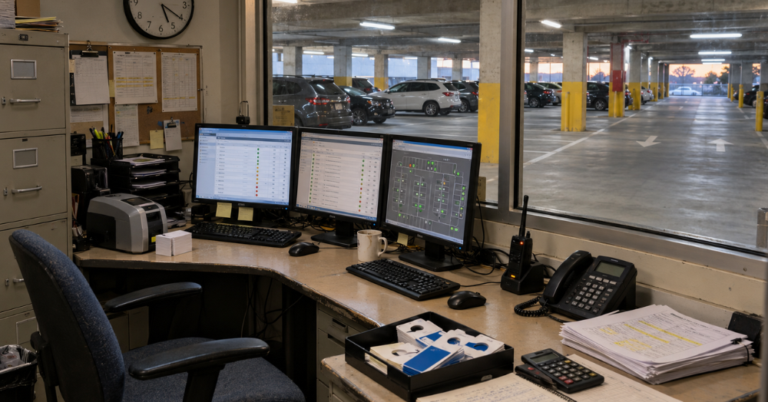
Administrators also benefit greatly from commuter management system integrations. When trip logging, benefits utilization, parking occupancy, and program participation data flow through a single system, administrators gain a complete picture of actual commuter behavior. Your team will better understand which interventions are driving change and where friction is quietly eroding participation.
Remember: Integration is more than convenient. It’s the mechanism through which all your employee commute experience strategies synergize and multiply their impacts. Essentially, it becomes the secret sauce that connects everything from personalized commute information and policy flexibility to parking management and strong support for alternatives to driving.
CommuteHub can help you build a better employee commute experience
The CommuteHub platform delivers all the functionality your organization needs to connect and centralize its parking policies, incentive programs, performance and compliance data, and personalized commuter information. CommuteHub was purpose-built to eliminate the fragmentation that causes commute-related friction in the first place.
Synced HR data means every employee sees options relevant to their location, schedule, worksite status, and classification. Flexible daily permitting eliminates phantom occupancy, while wage-based pricing, HOV prioritization, and comprehensive commuter information interfaces give employees a complete practical and financial picture at the very moment they make their daily commuting decision.