
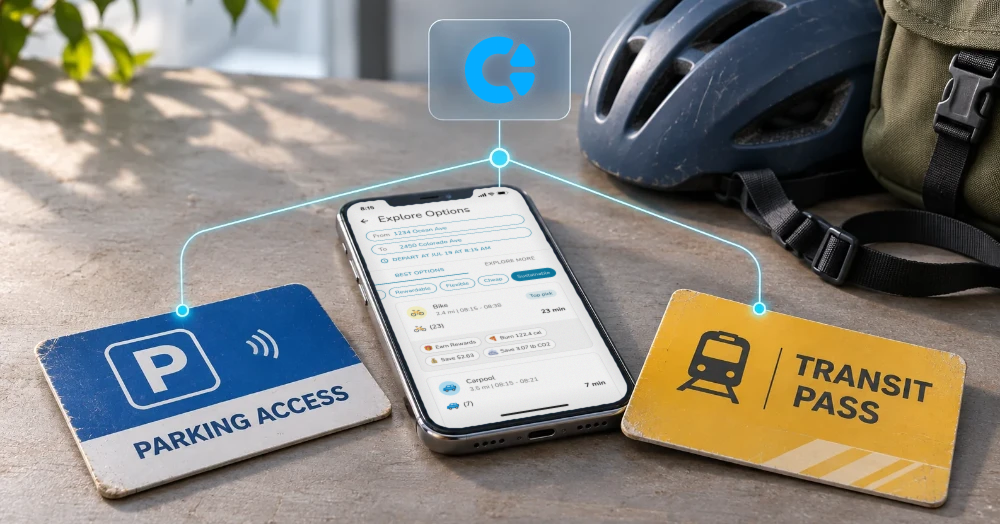
Parking lot management and transportation demand management are two sides of the same commuter management coin. Because they share some overlapping principles, even experienced professionals sometimes confuse the two concepts with each other, conflate them into a single category, or manage them as if they were unrelated.
The distinction between the two is critically important. Parking lot management governs the supply side of commuting: It determines who gets access, under what conditions, and at what cost. Transportation demand management, or TDM, governs the demand side: It focuses on how employees decide to get to work in the first place, and what factors influence modal decisions.
Treating them as separate domains, managed by different teams using different platforms, is a common and costly misstep. In practice, parking lot management and TDM work better when they’re treated as complementary priorities. The best place to start is by understanding what each discipline can and cannot do on its own.
Parking lot management alone can’t change how employees commute
At its core, parking lot management is about access control. It’s precise, rules-driven, and focused exclusively on what happens after a commuter has already decided to drive.
When done well, it’s capable of handling considerable levels of complexity across concepts like:
- Rule-based permit eligibility across employee classifications, worksites, and vehicle types
- Dynamic pricing, tiered access, and preferential zones for HOVs and EVs
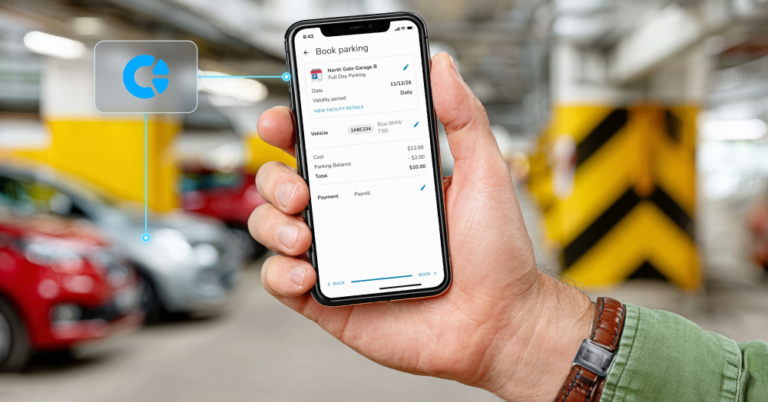
- Reservations, waitlists, renewals, and cash-out administration
- LPR-based enforcement, violation tracking, and payment processing
- Real-time occupancy monitoring and utilization analytics
These are not trivial functions. On a large campus with thousands of commuters, multiple facilities, and hybrid schedules, managing parking needs without purpose-built software is unbelievably tedious and labor-intensive.
Yet, parking lot management has one major limitation: It has no influence on how employees decide to get to work in the first place. The moment of actual behavioral influence — that first-thing-in-the-morning decision point when a commuter chooses between their car and an alternative — happens entirely outside its reach.
TDM alone doesn’t account for the policy choices that shape commuter behavior
TDM operates on the demand side of the commute equation, aiming to reduce the number of employees who choose to drive in the first place. Transportation demand management generally achieves this by making alternatives more visible, more rewarding, and easier than driving.
Unlike the rules-based strategies of parking lot management, TDM’s tools are primarily behavioral:
- Personalized commute planners generate practical modal alternatives based on each commuter’s address, schedule, and eligibility
- Points-based incentive programs reward verified alternative trips
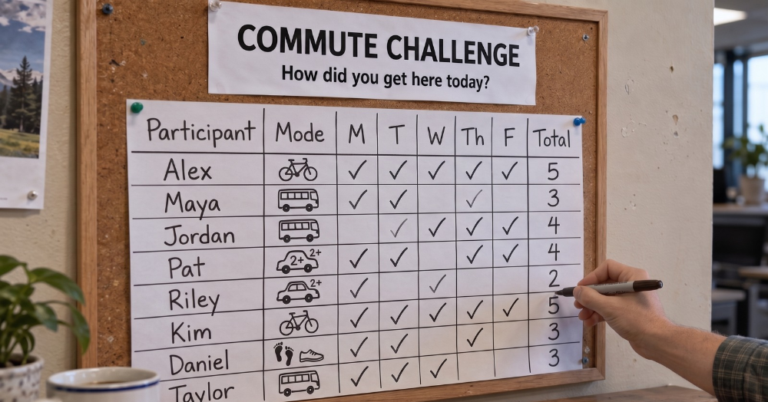
- Gamification, challenges, and social engagement sustain participation beyond initial enrollment
- Guaranteed ride home programs eliminate contingency anxiety, a widely cited barrier to giving up driving
- Commuter benefits administration groups transit subsidies, vanpool access, and reimbursements for active commuting together in a single, user-friendly interface
Effective TDM measurably reduces drive-alone rates, but it doesn’t stop there. It produces verified behavioral data, which is critical to effective organizational decision-making. TDM also generates the mode-split documentation that Scope 3 reporting and trip reduction compliance programs require.
Yet, there’s something very important that TDM cannot do on its own: enforce policy. A commuter who ignores every incentive and drives anyway faces no structural consequence unless parking policy creates one.
You need parking policy to create friction, cost barriers, and scarcity signals for drivers. Otherwise, your TDM program’s leverage is limited to commuters who are already on board with changing modes. That usually ends up capping its reach.
Siloed programs create gaps that undermine both concepts
When parking lot management and TDM run on separate, independently managed systems, the gap between them becomes a liability in four specific ways:
- Behavioral signals don’t connect. A commuter who earns a reward for taking transit on Monday should have a different experience if they drive on Tuesday. That difference could take the form of higher costs, reduced priority, or a behavioral nudge. When the incentive program and the parking system don’t communicate, that reinforcement never happens and the commuter could drift back into driving as a default choice.
- Data stays siloed. Parking utilization data reveals which days, zones, and employee populations drive the most. TDM participation data reveals which incentives are prompting mode shift and behavioral change. Neither dataset is as useful in isolation as it is in combination, but siloed systems make merging them an error-prone and laborious exercise.
- Administrative burden doubles. Two systems mean two workflows, two data streams, two sets of integrations, and two administrative teams managing the same physical commuter population from different angles. As organizational complexity grows, rising costs and efficiency losses compound into big headaches.
- Compliance reporting fragments. Trip reduction mandates, Scope 3 emissions reporting, and STARS submissions all demand a unified picture of commuter behaviors across modes. When parking and TDM data live separately, assembling that picture for a compliance report becomes a multi-day project rather than a quick file export.
Integration helps parking lot management and TDM reach their full strategic potential
The solution to the gap between parking lot management and TDM isn’t choosing one over the other. It’s building an integrated system where the unique strengths of both concepts shine through while using each to overcome the other’s limitations.
By combining parking management with TDM, you’ll generate powerful benefits that improve administrative efficiency, control costs, generate meaningful data, and support compliance.
Specific examples include:
- Interconnected behavioral signals. When parking reservations, incentive programs, and commuter benefits operate in a shared platform, every commute decision happens in a unified interface. A commuter choosing between driving and transit sees parking costs, transit options, and available rewards side by side, right at the moment they are making their commuting decision for the day.
- Unified data. Parking utilization, trip logs, mode split, and program participation flow into a single analytics environment. Administrators can see how parking policy changes affect TDM participation, and how TDM program outcomes affect parking demand without the need for manual reconciliation across disconnected systems.
- Streamlined administration. A single platform with HR integrations handles permitting, incentive qualification, benefits administration, and compliance reporting through shared workflows. It dramatically reduces permit processing time while eliminating duplicated overhead.
- Compliance documentation writes itself. When parking data, trip records, and program participation all live in one place, compliance reports become simple data exports, not massive projects.
CommuteHub: Where parking lot management and TDM become a single powerful program
CommuteHub is built on the premise that neither parking nor TDM can be fully optimized in isolation. The platform integrates advanced parking lot management tools with a complete TDM program suite. Parking features cover flexible permitting, dynamic pricing, intelligent reservations, LPR enforcement, and occupancy dashboards, while the TDM side governs personalized commute planning, incentive automation, gamification, commuter benefits, compliance reporting, and more.
HR and payroll integrations ground every data point in actual commuter activity. Agentic analytics seek and discover insights across both program areas simultaneously, connecting parking demand patterns to commute behavior trends in a single view.
The result is a seamless and unified transportation demand management solution where parking policy and behavioral programs reinforce each other rather than operating in inefficient isolation.
To arrange a personalized platform demo, talk to a CommuteHub expert today.
Can parking lot management reduce the number of people driving to work?
Yes. Parking prices, permit options and access rules can influence whether employees drive. But charging for parking won’t make an unavailable bus route appear. Parking lot management works best when employees also have practical alternatives, support and a reason to try something different.
See how to connect the two in Use Parking Policy to Shape Your Transportation Demand Management Program.
Do we need more parking spaces or a better parking program?
A full lot on Tuesday doesn’t tell the whole story. Before planning new construction, check which facilities fill up, when demand peaks and whether your permit rules match actual attendance. Better allocation and commuter support may relieve pressure without adding spaces.
Our guide to parking planning and TDM explains where to start.
Does better parking lot management mean getting rid of monthly permits?
No. A lecturer arriving twice a week and a security guard working five shifts have different parking needs. Daily or hourly options can serve occasional commuters, while recurring permits can remain available for regular drivers. The goal is to make parking fit the people using it.
Explore the options in Employee Daily Choice Parking: Turn Complexity Into Clarity.