
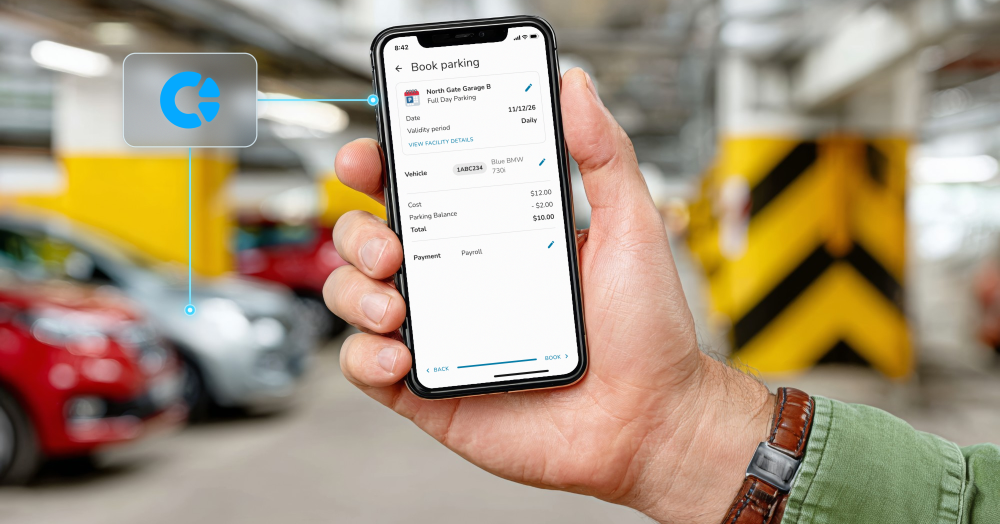
Organizations often operate with legacy parking lot systems they inherited rather than chose. These systems came with gates, permit management tools, and access hardware that were configured for a commuting landscape that doesn’t match the reality of today’s operational needs.
Hybrid work schedules, multi-classification employee populations, electric vehicle (EV) charging demand, sustainability reporting requirements, and commuter experience expectations have collectively outpaced what legacy systems were built to handle. The result is a growing list of operational gaps that you can’t fix by patching aging parking hardware.
Instead, you need to consider how those operational gaps interact with the four key parking management concepts discussed in this article.
By connecting these dots, you’ll build the foundations for a more modern and responsive parking operation, and a better experience for your commuters.
The limitations of legacy parking lot systems
Legacy parking lot systems were designed for one function: to control physical access. Permits are valid or invalid. Gates open and close. That’s it.
That logic worked when parking demand was predictable, employee populations were stable, and commuting happened on a fixed Monday-to-Friday schedule. None of those conditions reliably hold today. As a result, those legacy parking lot systems fail modern organizations in four main ways:
- Static permit rules. Fixed parking allocations don’t adapt to hybrid schedules, changing organizational needs, or multi-classification user bases with different pricing tiers and eligibility criteria. Every exception requires manual intervention, creating inconveniences for commuters and hassles for administrators.
- No real-time visibility. Legacy permitting systems have no way of tracking which permit-holders actually show up, which parking zones are over- or under-utilized, or how demand is distributed across times, days, seasons, or facilities. This lack of insight makes it difficult to base capacity decisions on objective data rather than subjective impressions.
- End-of-life security and support risks. Aging parking software often runs on unsupported infrastructure, as manufacturers frequently phase out support for their older systems. This creates compliance and operational risks that modern systems are much better at solving.
- No pathway to demand management. When access control is the only objective, parking lot systems have no mechanism for supporting active forms of transportation demand management (TDM). They can’t integrate with dynamic pricing policies, daily reservations, waitlist automation, wayfinding technologies, or behavioral nudges toward alternative modes. Instead, they just open and close the gates.
The high cost of fragmented transportation management workflows
You may be tempted to compensate for an aging parking lot system by layering additional tools on top of it. These could include a standalone permitting platform, a spreadsheet-based waitlist, manual parking enforcement processes, or a separate payment system.
In reality, these additional layers often cause more problems than they solve.
When permitting, payments, enforcement, and occupancy data live separately, administrative overhead increases. Staff spend time reconciling data across siloed, incompatible platforms. Errors accumulate at handoff points, and insights only follow from labor-intensive manual analysis. As a result, data can’t easily be consolidated into the kind of unified utilization picture that informs smart operational decisions.
If any of that sounds familiar, it might be time to replace your parking management technology.
What you stand to gain from connected parking lot systems
Modern parking lot systems are built on a totally different premise. Instead of access control, TDM becomes the goal. When you recalibrate your parking lot system’s primary function, you change what the system can accomplish.
This simple but powerful shift unlocks capabilities like:
- Rule-based permit logic for handling complex eligibility requirements automatically. Set up permits based on employee or vehicle classifications, on-site attendance schedules, pricing tier, and much more — all without any need for a manual review at each step.
- Daily choice reservations can replace static annual or monthly permits with dynamic, demand-responsive parking access. Employees reserve parking only on days when they’re actually coming in, making inventory available to employees who need it instead of having it sit idle behind unused permits.
- Dynamic pricing that responds in real time to demand signals, automatically adjusting rates by zone, time, and lot occupancy status. When parking carries a daily, demand-responsive cost, commuters will adjust their travel behavior themselves without any need for additional prompts or interventions.
- Real-time occupancy and enforcement systems for connecting license plate recognition (LPR) cameras, access gates, occupancy sensors, and EV charging infrastructure across a single operational picture. Parking enforcement becomes automated, consistent, transparent, and documented, which builds trust and reduces disputes.
- Waitlist automation to eliminate spreadsheet-based queue management and its massive administrative costs. Instead, permit vacancies automatically trigger digital notifications when parking holds expire. Inventory moves to the people who need it most, and your administrative team won’t have to lift a finger.
Integrating parking with HR, mobility, and incentives
The most significant gap between legacy parking lot systems and their modern counterparts doesn’t operate at the level of individual features. It operates at a systems level, through integration capabilities.
When parking links directly to HR and scheduling systems, access rights update automatically as workforce data changes. An employee switching to a remote schedule doesn’t hold a spot that could serve someone else. A new hire gets onboarded into the right permit tier without any need for a manual setup.
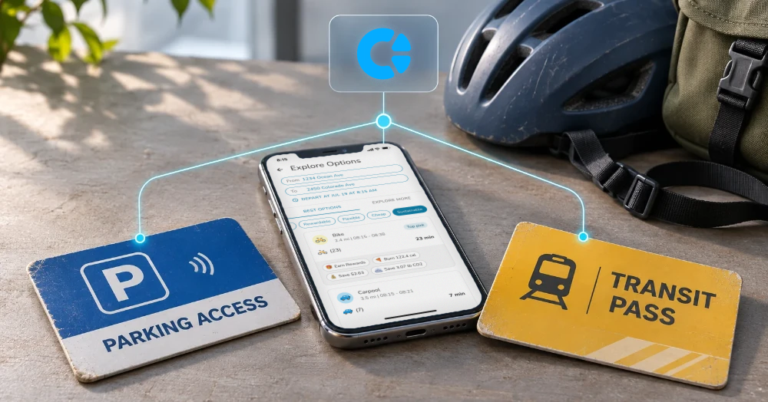
By integrating with commuter incentive programs, you shift the daily parking decision and the commute mode decision into the same interface. A commuter who chooses transit instead of driving can earn points toward rewards in the same platform they would’ve used to reserve their parking spot. The parking system and the TDM program reinforce each other rather than operating in parallel silos.
You can similarly connect your parking data to sustainability and compliance reporting, utilization figures, mode split tracking, and emissions-related trip records. These data points will flow into your tracking reports without any manual intervention. The parking system becomes part of your Scope 3 reporting infrastructure, rather than operating outside of it.
This is the fundamental difference between upgrading an aging parking lot system and replacing an outdated system with a modern parking platform. An upgraded system does the same thing it always did, only faster. A platform does things the legacy system was never capable of doing in the first place.
CommuteHub powers parking lot systems built for modern mobility needs
CommuteHub replaces the fragmented, access-control-first approach of legacy parking lot systems with a fully integrated platform connecting parking management, commuter programs, HR data, and compliance reporting.
Rules-based permitting and digital workflow automations handle the full permitting lifecycle, from application and approval to renewal and revocation. You can extend this functionality to any permit type, from hourly to yearly, across any number of facilities. Eligibility logic isn’t handled externally by staff. It’s encoded into the system.
LPR integration, access gate connectivity, geofenced zone management, and intelligent violation tracking replace manual enforcement with automated, consistent, documented compliance. Payroll integration handles penalty collections without any administrative overhead, while dynamic pricing, waitlist automation, and daily reservations give administrators demand management tools that static legacy systems simply don’t support.
Instead of spending resources on parking lot systems that weren’t built for these use cases, upgrade to a modernized alternative created for modern technologies and commuting patterns. Get started today: Contact RideAmigos to arrange a personalized demo of the CommuteHub platform.