
Public-sector transportation demand management (TDM) programs have a long history of good intentions and uneven results. The strategies that defined the field for decades — generic transportation guides, employer outreach packets, carpool and vanpool programs, annual commuter surveys — were built for a different era. Yet, many local governments continue to rely on these legacy tools, which have dwindling relevance and limited impact.
Modern, behavior-driven TDM programs have the potential to achieve far more, especially when they’re powered by next-generation transportation demand management software platforms. This overview explores the gap between legacy TDM strategies and the data-driven upgrades available today. It covers:
- What legacy TDM programs get wrong
- The shift to behavior-driven, tech-powered programs
- Modern approaches to data collection and compliance
- Scaling TDM solutions across employer networks
What legacy TDM programs get wrong
The Victoria Transport Policy Institute (VTPI) has documented a consistent finding across decades of TDM research: commute trip reduction programs that lack financial incentives tend to achieve drive-alone declines of less than 10%. Many legacy public TDM programs are built almost entirely on strategies that fall below that threshold.
Three specific failure modes recur in traditional public TDM strategies:
- Awareness-only outreach. Generic sustainability campaigns and “try transit” messaging ask commuters to change their travel behaviors without addressing the conditions that make driving the default. When public TDM policy doesn’t create a financial upside for choosing an alternative, the needle doesn’t move.
- Overreliance on ridematching. Carpooling was once king of the TDM world. However, it has faltered because ridesharing networks depend on large registration pools to generate viable matches. Programs running on static databases with low enrollment rates consistently underperform. The match quality simply isn’t there.
- Imprecise survey data. Public agencies have historically used annual commuter surveys, which often fail to capture nuances like seasonal variations while skewing toward people who already commute sustainably. Tracking actual commuter behavior is far better, but most legacy strategies don’t support it.
To modernize your public TDM program, you need to break free of these strategic traps.
The shift to behavior-driven, tech-powered programs
Modern TDM programs overcome the limitations of their legacy counterparts by engineering the conditions that make sustainable choices easier, more financially attractive, and more socially visible than driving. Three specific capabilities define this strategic upgrade:
- Financial incentives for verified behavior. A long-term VPTI study of 1,110 Los Angeles area commute trip reduction programs found that financial incentives were the most effective strategy evaluated. The mechanism matters: Incentives tied to verified trip logging generate documented behavioral data in addition to genuine commuter value. Self-reported participation programs generate neither with any reliability.
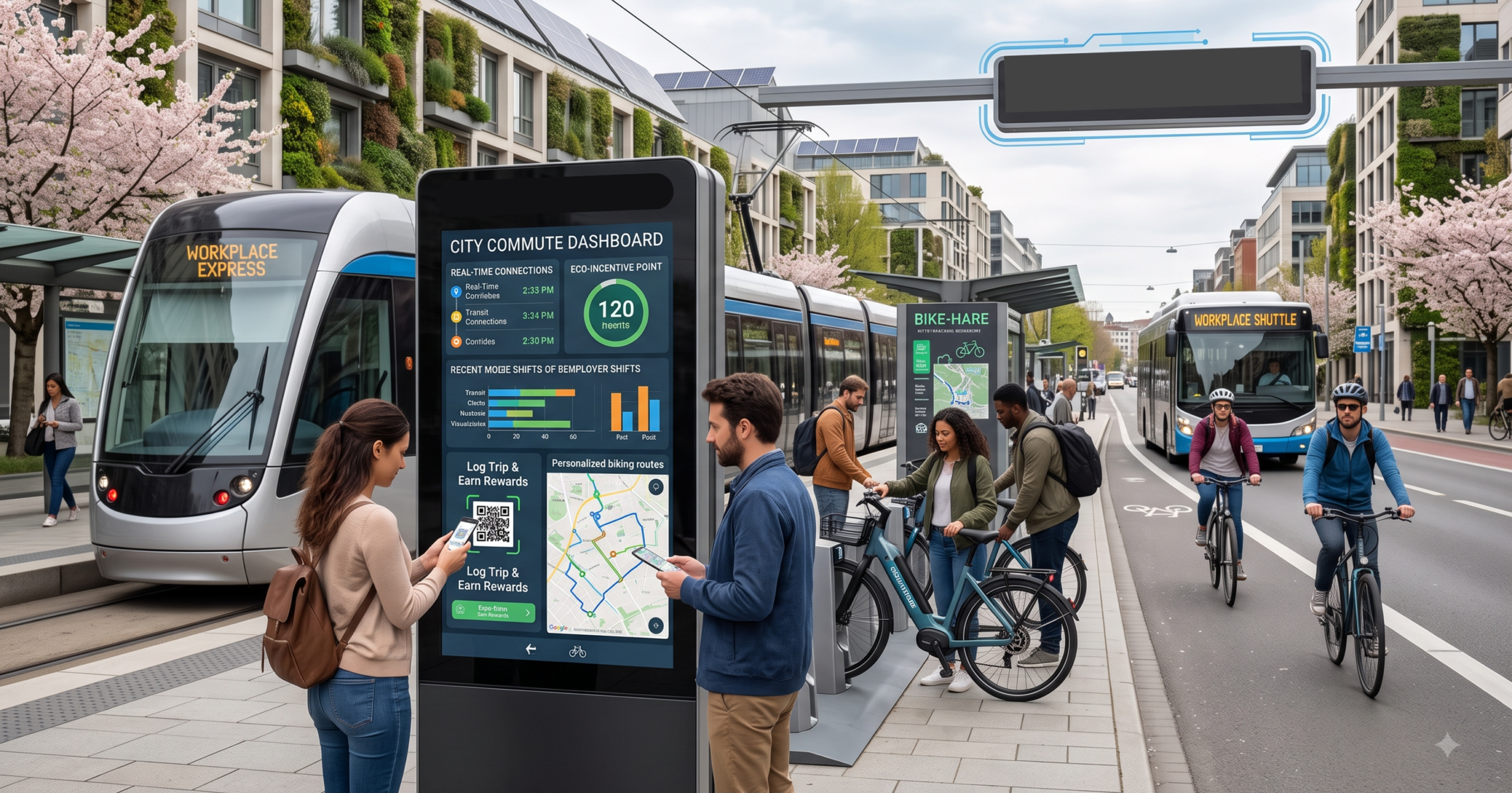
- Personalization at scale. Legacy programs broadcast the same message to every commuter, regardless of where they live or what alternatives are realistically available to them. Modern platforms find mode-specific and location-specific options, personalized for each individual. This makes alternatives to driving more accessible, more practical, and more likely to stick.
- Habit-sustaining gamification. Challenges, leaderboards, and commuter incentive programs convert one-time trial behavior into a durable commuting habit. They also generate the social proof that peer networks amplify far more effectively than any institutional campaign.
Modern approaches to data collection and compliance
Public TDM programs face growing pressure to demonstrate outcomes, not just activities. Regional planning bodies, state DOTs, and federal funders increasingly require verified trip reduction data and VMT figures capable of withstanding auditor scrutiny.
Legacy survey-based methods are increasingly inadequate. Continuous GPS-verified trip logging addresses three core problems simultaneously:
- Mode confirmation is formally verified, not assumed
- Data reflects actual behavior across seasons and days of the week, not recalled estimates
- Compliance reports become a byproduct of normal program participation, not a separate administrative project
When programs run on a single integrated platform rather than spreadsheets and disconnected agency systems, assembling a compliant TDM report becomes much easier while also giving public TDM administrators more time for higher-impact work.
Scaling TDM solutions across employer networks
The most effective public TDM programs don’t just serve individual commuters. They serve the employer networks those commuters belong to. TMOs, MPOs, and regional transit agencies that give employer partners enterprise-grade tools multiply program impact without multiplying overhead.
Legacy forms of employer outreach, which have typically consisted of a PDF toolkit and an annual check-in call, limit engagement. Modern employer partner programs look different, since they include:
- Branded commuter portals configured to each employer’s needs
- Configurable incentive programs with real-time participation dashboards
- Multi-language support for diverse regional populations
- Fraud detection and configurable approval workflows at public program scale
These features empower employers to become active partners rather than passive recipients. From there, regional mode shift outcomes start moving in the right direction.
CommuteHub: Built for modern public TDM
More than 515,000 travelers across 13,000+ employer networks already use CommuteHub to log trips, earn rewards, and access sustainable transportation options. Public agencies save 100+ hours per program through automated data validation, approvals, outreach, and reporting.
All the while, CommuteHub delivers everything modern public TDM requires:
- Verified GPS trip logging and continuous mode data collection
- Personalized commute recommendations at individual and regional scale
- Advanced incentive automation, gamification, and premium rewards fulfillment
- Employer partner tools, fraud detection, and configurable approval workflows
- Compliance reporting, interactive dashboards, and agentic analytics
- Branded iOS and Android apps, localized for each agency or region
Smarter TDM programs start with CommuteHub. Contact us to arrange a personalized platform demo today.